
How AI Solves the Biggest Problem in Online Learning
 Danny Iny
AI is changing education in ways that go far beyond faster content creation. It may finally solve one of the biggest problems in online learning: helping students turn understanding into real transformation.
This Article Answers
- How is AI changing online learning and course creation?
- What is Bloom’s “2-sigma problem” in education?
- How can AI provide personalized tutoring at scale?
- How can course creators use AI to help students achieve real transformation?
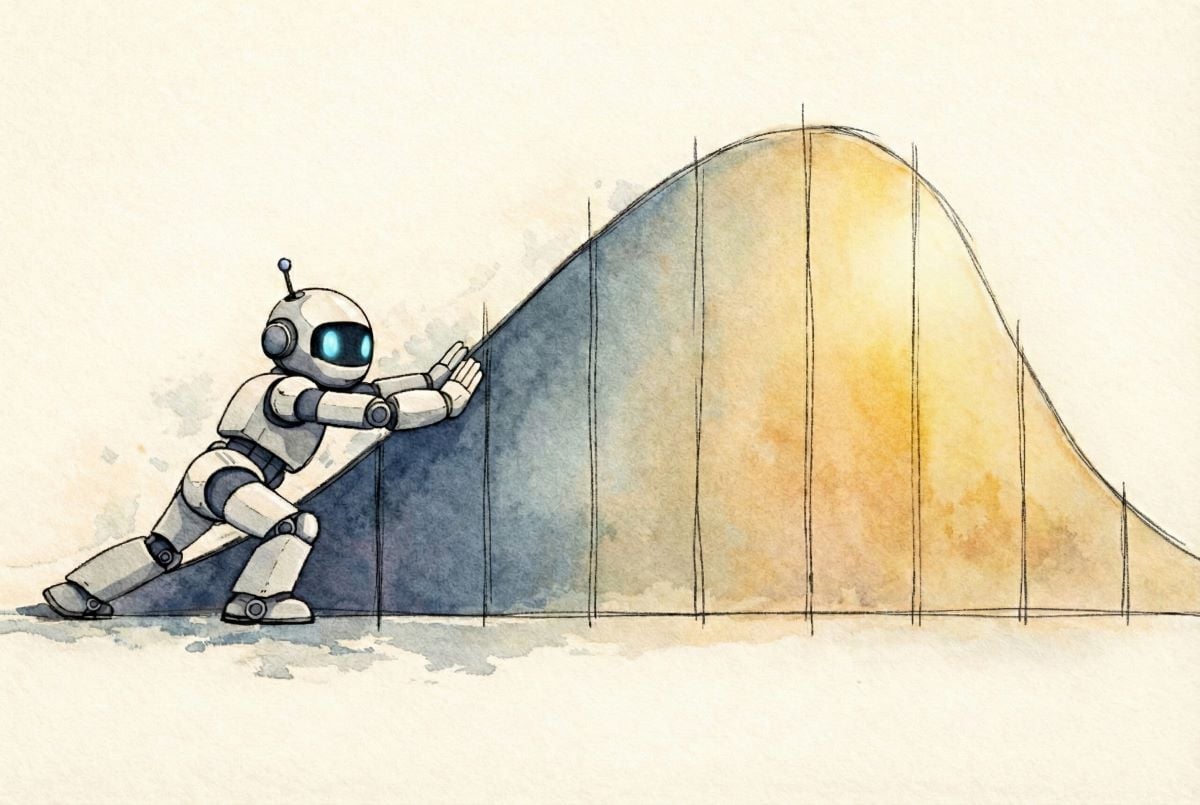
Everyone’s talking about how AI is transforming education and online courses. And they’re mostly talking about the same thing: how much faster you can create content now.
“Generate your course outline in minutes.”
“Turn your expertise into scripts.”
“Draft emails, write marketing copy, build landing pages.”
It’s all about speed and efficiency on the creation side. And sure, that’s helpful. It cuts down production time. It makes it easier to get ideas out of your head and into a structure. So it feels like progress.
But there’s something missing in that discussion. The bottleneck in online learning has never been content creation.
You could always hire a writer. Record more videos. Build better slides. Create more PDFs and workbooks and templates. The mechanics of making a course have never been the real constraint.
The real constraint has always been transformation.
People sign up excited and fade out by week three. They consume the content but don’t get the result. They watch the videos but don’t do the work. (Or they do the work, but it doesn’t stick.)
This isn’t new. It’s been the persistent gap in online learning since online learning began. You can deliver information at scale, but you can’t deliver transformation at scale. Not really. Not consistently.
So everyone fixating on how AI helps you make courses faster is solving the wrong problem. We should be asking how we help people transform more deeply, not how we create content faster.
The 2-Sigma Problem in Online Learning
We’ve known how to solve this problem since the 1980s, which makes the current moment even more frustrating.
In the mid-eighties, educational researcher Benjamin Bloom ran an experiment comparing different approaches to learning. He set up three groups of students studying the same material.
The control went through traditional classroom instruction. Teacher at the front of the room, students taking notes, same lesson for everyone. It’s the standard model most of us have experienced.
The second group followed what educators call a “mastery-based” approach. Which is just fancy speak for “you don’t move to lesson two until you’ve actually understood lesson one.” It sounds obvious, but it’s not how most education works. Because of constraints, we usually move everyone forward together regardless of whether they’re ready.
The third group got mastery-based learning plus one-on-one tutoring for students who needed additional support.
The results were that students in the second group – mastery learning alone – performed one standard deviation above the control group. That’s already significant. It means the average student in that group was performing better than about 84% of students in the traditional classroom.
But students in the third group, with mastery learning and tutoring, performed two full standard deviations above the control.
In case you never had (or don’t remember) your statistics basics, that means the average student in the tutored group performed at the 98th percentile compared to students in the traditional classroom.
Average became exceptional.
With individualized guidance and the freedom to master concepts before moving forward, average students were performing at the level of the top 2% in a traditional setting.
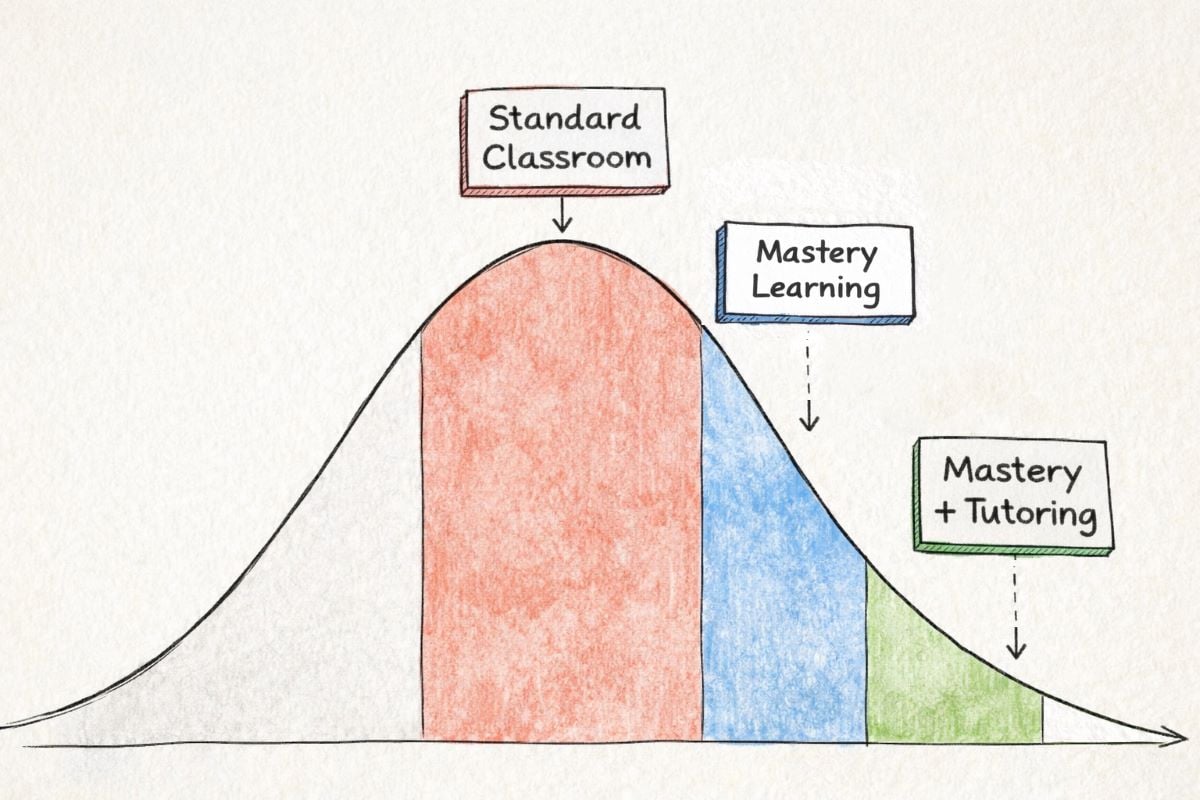
Bloom called this the “2-sigma problem.” (Sigma is the Greek letter used in statistics to represent one standard deviation.) And it wasn’t a problem of not knowing how to help students succeed. We knew exactly how. The problem was feasibility.
To replicate those results at scale, you’d need enough tutors for every student who needs support. You’d need enough hours in the day. Enough money to pay for all that individualized attention.
So the barrier to universal mastery has never been pedagogical. We’ve known the pedagogy for forty years. The barrier has been economic.
There simply weren’t enough people, enough time, or enough money to provide that kind of individualized support to everyone who needed it.
Until now.
When AI Turns the Learning Environment Into a Tutor
I saw this shift firsthand last year during my AI Strategist trainings. These are three-day intensives where I guide hundreds of people through strategic thinking and practical AI implementation.
I’ve run plenty of three-day trainings over the years. They’re dynamic, experiential, built around exercises and breakout sessions. But there’s always been a constraint I’ve had to work around.
The exercises have to be focused, specific, and tightly bounded.
Give people five minutes, maybe ten, with a very clear task like, “Who is a SPECIFIC person you would LOVE to work with, who you know holds you in very high regard, and would be happy to invest to work with you?” or “What’s the outcome that your ideal customer desires so strongly that they’ll pay and do whatever you ask to get it?”
I use tight questions with clear parameters because when you’ve got hundreds of people in the room – or on Zoom, spread across time zones – you can’t provide individual guidance to everyone. If the assignment is too open-ended, some people get confused. Others go off on tangents. And you have no way to catch them before they’ve spent twenty minutes heading in the wrong direction.
So you keep the scope narrow. You design exercises that most people can complete without needing help. It’s not ideal, but it’s practical. You manage the risk by limiting the depth.
But with the AI Strategist training, I tried something different.
I started embedding AI prompts directly into the learning experience. Not as a gimmick or a novelty, but as working partners in the room. These were structured prompts that could hold a conversation, ask clarifying questions, provide feedback, and guide people’s exploration in real time.
And suddenly the constraint disappeared.
I could give people assignments that were broad and deep. “Spend the next hour exploring your strategic positioning. What makes your approach unique? What do you see that others miss? How does that translate into value for your clients?”
And I could give them an hour, not five minutes. And not with a worksheet full of fill-in-the-blank questions, but with a conversational AI that could meet each person where they were and guide them forward.
People went further than I’d ever seen. They went faster. And they did it with fewer breakdowns. They had less confusion and more confidence. The work they produced was deeper and more specific than what typically comes out of time-constrained workshop exercises.
The guardrails weren’t in my instructions anymore. The guardrails were in the dialogue itself.
The environment had become more intelligent. It wasn’t that I’d suddenly become a better teacher or that I’d found some perfect set of instructions. The support structure – the thing that used to require a coach or TA standing over someone’s shoulder – was now embedded in the assignment itself.
The tutor was inside the assignment.
This is Bloom’s 2-sigma effect, happening in real time, at scale, without requiring an army of teaching assistants.
AI Doesn’t Replace Teachers. It Replaces Worksheets.
So AI isn’t replacing the course – despite what some people might claim. And it’s not replacing the teacher or the coach. It’s replacing the worksheet. The PDF. The static workbook that sits there with its list of reflection questions and fill-in-the-blank exercises.
Think about what a traditional online course actually looks like in practice.
You watch a video where someone teaches a concept. Then you get a PDF or a workbook. “Now it’s your turn. Answer these questions. Apply this framework to your situation.” And you’re supposed to sit there and do the work.
But most people read the questions, think “Yeah, that’s a good question,” and then either skip it because they’re not sure how to answer, or they write something surface-level because they don’t have enough guidance to go deeper.
The worksheet can’t adapt. It can’t ask you a follow-up question when your first answer is too vague. It can’t notice when you’re avoiding the hard part of the question. It can’t say, “Okay, but what does that actually look like on Tuesday morning when you sit down at your desk?”
A good tutor would do all of that. But worksheets can’t. They’re static. One-size-fits-all. And they leave most learners stuck at the surface.
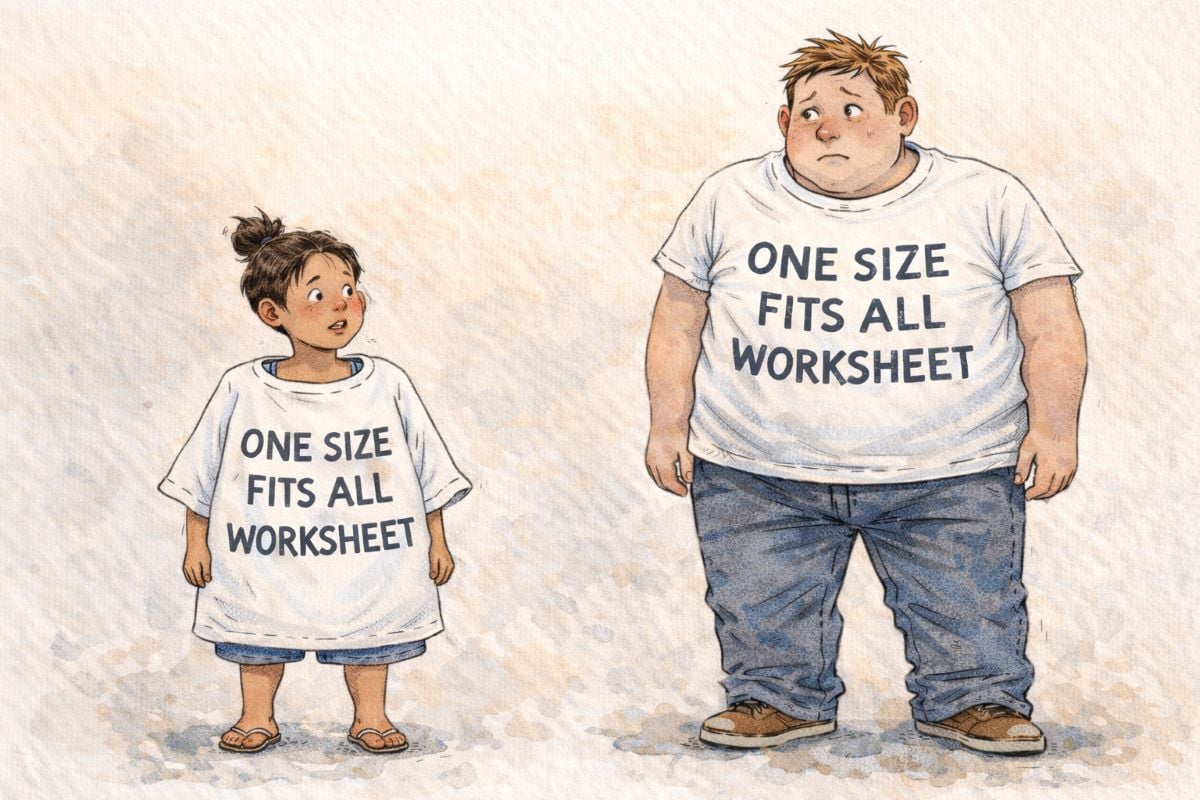
Now imagine every exercise becoming an interactive, adaptive conversation.
Instead of handing someone a list of reflection questions, you give them a prompt that has the conversation with them. A prompt that asks the next question based on their answer, that notices when they’re being generic and nudges them toward specificity, that provides real-time guidance and containment – the same kind a good coach or teaching assistant would provide.
This is “dialogical containment.”
The prompt becomes a living container for guided work. It holds the learner, keeps them on track without constraining them, and provides scaffolding that adjusts based on what they actually need in the moment – not what some generic worksheet assumes they might need.
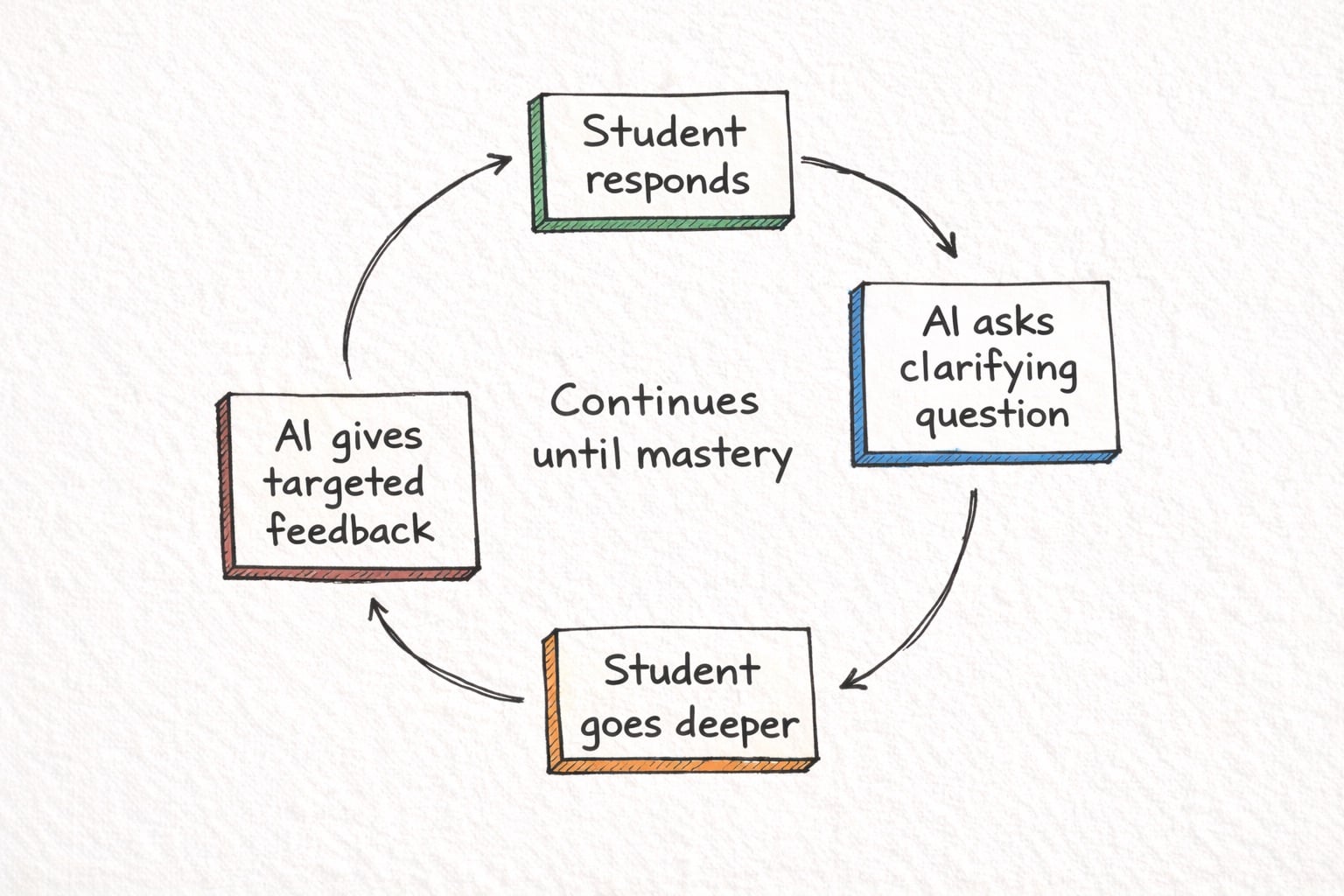
Yesterday’s online course had videos and PDFs. Tomorrow’s online course has conversations.
And this is exactly how we close Bloom’s 2-sigma gap. We don’t replace human teachers… their wisdom, design, and judgment matter more than ever. Instead, we extend their reach. By making it possible to provide adaptive, individualized support at scale in a way that actually works economically.
For the first time in history, the pedagogy of mastery and the economics of scale aren’t in tension anymore.
Amplified Learning: Human Wisdom + AI Guidance
The principle extends far beyond courses.
Online courses are just one way to structure transformation. The same principle – embedding adaptive guidance directly into the learning experience – applies anywhere people need support to implement, reflect, or practice what they’re learning.
Coaching. Consulting. Leadership development. Sales training.
Anywhere there’s a gap between “I understand the concept” and “I can actually do this in my situation.”
This is what I’m calling Amplified Learning – experiences where human wisdom meets AI guidance to create depth at scale.
Consider a leadership coach working with executives. In the traditional model, you meet once a week or once a month. Between sessions, the client is supposed to reflect on your conversations, practice new behaviors, work through challenges as they come up. But without support between sessions, most of that work doesn’t happen. Or it happens shallowly. The live coaching sessions are valuable, but there’s a lot of white space between them where the client is on their own.
Now picture the coach providing an AI prompt that guides reflection and application between sessions. The executive logs in after a difficult board meeting, describes what happened, and the prompt walks them through the coach’s framework for navigating organizational politics. It asks the questions the coach would ask. It notices when they’re reverting to old patterns. It prompts deeper thinking about what’s really at stake.
The next live session becomes more valuable because the between-session work actually got done – and got done well.
Or think about a consultant helping a company implement a new strategy. The usual bottleneck isn’t understanding – it’s translation. The team knows what they’re supposed to do at the conceptual level. But translating strategy into daily decisions and actions is where most implementations stall out.
What if the consultant built an AI guide that walks the team through implementation step by step? “You’re in a client meeting and this situation comes up – how does the new strategy apply?” The AI can troubleshoot obstacles, answer questions, keep the team on track. The consultant’s expertise gets multiplied because the guidance doesn’t stop when they leave the building.
Or imagine a course that doesn’t just deliver content, but comes alive through dialogue. You watch a fifteen-minute video about decision-making frameworks. Then instead of filling out a static worksheet, you have a conversation with an AI that helps you apply the framework to an actual decision you’re facing right now. The learning moves from abstract to concrete. From theoretical to applied. From “I understand this” to “I can use this.”
This amplifies the teacher’s work rather than automating it.
The business model shifts, yes. When learners succeed more consistently, your reputation strengthens, referrals increase, delivery costs drop. You can scale without burning out or sacrificing intimacy.
But the deeper shift is about what becomes possible. You can finally deliver the kind of transformation that used to require coaching calls, office hours, teaching assistants, personal feedback loops – the intensive, expensive, high-touch support that made deep learning work – and you can do it in a way that’s both effective for learners and sustainable for you.
AI Makes Mastery at Scale Possible
For forty years, we’ve known exactly how to create mastery. Bloom showed us. One-on-one tutoring combined with mastery-based learning produces results so profound that average students perform like exceptional students.
But we couldn’t afford it. The economics didn’t work. The logistics were impossible. There weren’t enough tutors, enough hours, enough money.
That barrier just fell.
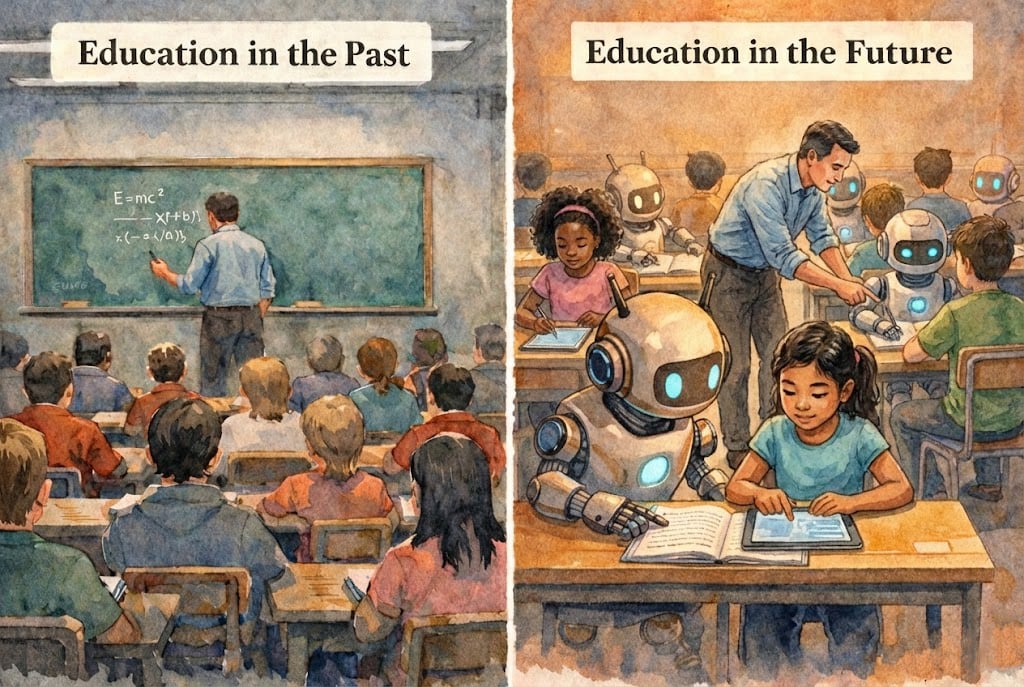
AI embeds an infinitely patient tutor inside every assignment. Every exercise. Every moment where a learner used to sit alone with a worksheet and their own confusion, wondering if they’re doing it right. That’s what changed. It’s not your experience, or your wisdom, or your judgment – the AI extends those things rather than replacing them.
The 2-sigma problem can finally be solved. And not in some distant future when the technology improves or when we figure out the perfect implementation. It can happen now. Today. With tools we already have.
And fortunately, it doesn’t mean rebuilding your entire course or becoming an AI expert or assembling a development team. You just have to stop thinking about how AI helps you create faster. Instead, think about how it helps your learners transform deeper.
Because mastery at scale isn’t limited by human bandwidth anymore. It’s not constrained by economics. And it isn’t a pedagogical pipe dream that works in theory but fails in practice.
It’s a design choice.
And it’s one you get to make.
Platforms like Ruzuku are already making this practical for independent course creators – combining cohort-based delivery, built-in discussions, and step-by-step course structures that keep learners engaged and moving forward together.
The Core Takeaway
AI isn’t just making it faster to build courses.
It’s making it possible to deliver personalized guidance at scale, something online education has struggled to achieve for decades.
When course creators replace worksheets with guided AI conversations, they move beyond information delivery and toward real transformation.
Want to go deeper on this?
Inside the free AI Strategist Quickstart course, we show experts how to use AI as a thinking partner to deepen learning, clarify their strategy, and turn ideas into real progress.
about author
Danny Iny
Danny Iny is the founder of Mirasee, a 6x best-selling author, and an entrepreneur who helps coaches, consultants, and experts build businesses that are both profitable and purpose-driven. He’s best known for showing people how to package their expertise into premium offers, attract the right clients, and grow thriving businesses that make a real impact.
Read more posts by Danny Iny