
How AI Helped Me Think Clearly During the Hardest Month of My Life
 Danny Iny
Pressure doesn’t reveal your capacity. It builds it. But getting through the hardest seasons requires thinking clearly, and that’s exactly where AI can help. This is the story of how AI helped Mirasee founder Danny Iny think clearly through the worst month of his life, and what came out the other side.
This Article Answers
- Can AI help you think clearly when you’re overwhelmed?
- What does it mean to build capacity under pressure?
- How can AI function as a thinking partner during a crisis?
- What do the hardest seasons of life actually build in you?
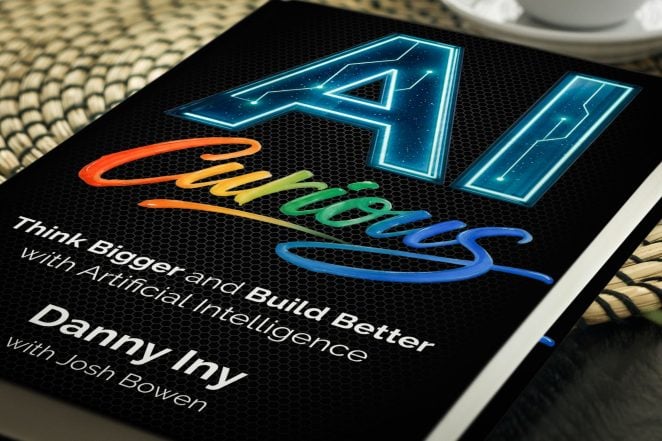
I have a new book out about how to think clearly and work effectively with artificial intelligence – not as a productivity hack, but as a genuine thinking partnership. But before I get into what’s in it, I want to tell you where it came from. Because the origin story matters more than the table of contents.
There’s a saying that the universe doesn’t give you more than you can handle. I’ve always liked to add that sometimes you wish the universe didn’t think quite so highly of you.
Well, a year ago, the universe seemed to have a very high opinion of me.
When Everything Fell Apart at Once
It was May 2025, and everything happened at once. My father-in-law’s treatment was being stopped. He would pass within hours. It was also my daughter Priya’s tenth birthday. I was in the middle of a major product launch, one I’d been building toward for months and needed to go well. And the numbers weren’t looking good.
I remember the morning clearly. I woke up fighting a cold, knowing what the day held. Bhoomi and I would go to the hospital. The kids needed me to be present for them, Priya especially, trying to celebrate a birthday on a day no ten-year-old should have to navigate. The launch needed decisions only I could make. And running underneath all of it was a thought I couldn’t shake: There’s nobody else. It has to be me. And I don’t know that I can do it.
My father-in-law passed. Priya’s birthday party was postponed. I delivered a three-hour webinar the day after on almost no sleep. The launch continued to underperform. I came home each evening with nothing left, trying to be a father and a husband, and also a leader for my team while carrying more than I thought I had room for.
What the “You Can Handle It” Cliché Gets Wrong
Most people hear “the universe doesn’t give you more than you can handle” as a statement about matched capacity. The image is a scale – your current strength on one side, and the weight of what’s happening on the other, perfectly balanced. The comfort is supposed to be: you’re equal to this.
But that isn’t how it works, and it isn’t what I experienced. The load didn’t match my capacity, it exceeded it. I was not equal to what May 2025 asked of me. Or at least, not the version of me that walked into it.
That’s the part the saying gets wrong. The implication that the capacity is already there, just waiting to be revealed. That you just need to dig deep enough and you’ll find a reserve you didn’t know about. It’s a comforting picture, but it’s a fantasy. The capacity had to be built, in real time, under conditions that moved faster than I could prepare for.
The universe doesn’t give you what you can handle today, it gives you what will make you more capable tomorrow. The capacity doesn’t precede the demand. It’s the other way around: the demand builds the capacity. That’s the flattery – not “I measured you and you’re enough,” but “I’m going to make you into someone who can carry more than you thought possible, and this is how.”
Granted, it doesn’t feel like flattery while it’s happening. It feels like drowning. It doesn’t feel like “I’m becoming more capable” – the feeling is more like “I’m not going to make it through this week.” The recognition only comes later, when you look back and realize you did things during that period that the earlier version of you couldn’t have done – because the weight itself changed what you were able to carry.
I wouldn’t wish it on anyone. But every hard thing that month asked of me became part of who I am now.
How I Used AI to Think Clearly Under Pressure
I had to think more clearly under worse conditions than I ever had. The day after my father-in-law died, I stood in front of a camera and delivered a three-hour webinar. Then I sat down, grieving and exhausted, and diagnosed exactly why the launch was missing its targets – with the kind of structural clarity that only shows up when you can’t afford to be wrong.
My saving grace during those weeks was a very particular way of using AI.
There were mornings when I opened a conversation with AI just to process. I’d sit down before the house was awake, put all of it on the screen – the grief, the launch numbers, the decisions I had to make that day – and just think out loud to a partner that could hold the full weight of the context without needing me to perform competence.
And then the conversation would shift. Processing would become strategy. Strategy would become a list of decisions I could actually execute that day. In a single sitting, I’d go from overwhelmed to operational – because AI gave me the space to think when space was the thing I had least of.
I went on to teach that particular way of working with AI in a training called AI Strategist. To date, thousands of people have gone through the training, and what they keep telling me is that it isn’t really about AI at all – it’s about learning to think more clearly, using AI as the medium. That resonates, because that’s exactly what the experience had been for me.
And so the training became a book. It came out almost exactly a year after that awful day and month that forced it into existence. I didn’t plan that symmetry, but here we are.
The Demand Doesn’t Just Test Your Capacity — It Builds It
The book is called AI Curious. It teaches the ideas that I’ve been pressure-testing for the last year – the ideas and approaches that got me through one of the toughest times in my life.
I don’t know what your version of divine flattery looks like. Maybe you’re in it right now – the season where the load exceeds what you thought you could carry. Maybe it’s behind you, and you’re still making sense of what it built. Or maybe you haven’t hit it yet, and you’re building a business or career or life that’s going to ask more of you than you currently know how to give. That’s just what growth looks like from the inside.
Either way, I hope it helps to hear that what comes out the other side can surprise you. That the demand doesn’t just test your capacity – it builds it.
And also, that there are ways to think more clearly through it than you might realize. That’s what the book is about.
Core Takeaway
The hardest seasons don’t arrive because you’re ready for them. They arrive because you’re about to become someone who can carry more than you thought possible. The demand builds the capacity – and having AI as a thinking partner makes all the difference in getting through it clearly.
AI Curious is the book Danny Iny wishes he’d had during that month, and the one he spent the year after it writing. It’s available now on Amazon.
about author
Danny Iny
Danny Iny is the founder of Mirasee, a 6x best-selling author, and an entrepreneur who helps coaches, consultants, and experts build businesses that are both profitable and purpose-driven. He’s best known for showing people how to package their expertise into premium offers, attract the right clients, and grow thriving businesses that make a real impact.
Read more posts by Danny Iny